

Top Chef Winner Melissa King: What Changed When I Stopped Holding Back
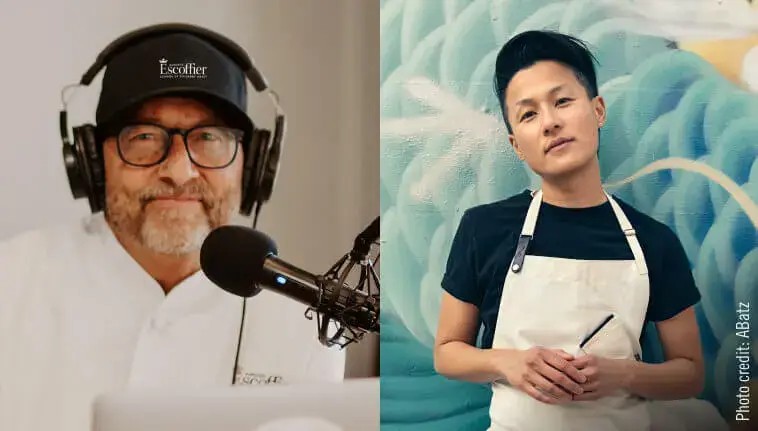
In today’s episode, we welcome Melissa King, Top Chef All-Stars champion, record-breaking competitor, cookbook author, and host of National Geographic’s Tasting Wild.
Melissa shares what changed between her first season of Top Chef and her return to win it all. She opens up about growing up shy, fighting for her dream of culinary school, and the moment she stopped replicating other chefs and started cooking from her own identity. We talk about mentorship, discipline, sacrifice, and why competing on Top Chef is ultimately about competing against yourself. She also discusses her cookbook Cook Like a King, her blend of California sensibility and Chinese heritage, and how using her platform for advocacy has become central to her work.
Join us as Melissa explains how owning her voice—not just her technique—became the key to winning in the kitchen and beyond.
Watch the podcast episode:
Don't Miss The Next Podcast Episode!
Get the latest episode of The Ultimate Dish delivered right to your inbox every week.
Email Address:
Jump to a Section
- FULL TRANSCRIPT
- Top Chef Family
- The Power of Food
- Competing Against Yourself
- Cracking Open Her Identity
- Fighting for the Dream
- Start with Training Wheels
- Learn from People You Respect
- Cook Like a King
- No-waste Cooking
- A Food Point of View, from Home to Michelin Kitchens
- Tasting Wild
- Speak Up for Important Things
- Melissa King's Ultimate Dish
Episode Notes and Resources
TRANSCRIPT
Kirk Bachmann: Hello everyone, my name is Kirk Bachmann, and welcome back to The Ultimate Dish! Today, we are thrilled – I am thrilled – to welcome Chef Melissa King, Top Chef All-Stars champion, award-winning chef, television personality, and cookbook author.
Melissa is best known as the winner and Fan Favorite of Top Chef All-Stars: Los Angeles – we’re going to talk a lot about that today – where she holds the record for the most challenge wins in the history of the show. She’s the host of National Geographic’s docuseries Tasting Wild – absolutely amazing – and has served as a judge on shows like Top Chef, America’s Test Kitchen, and Pamela Anderson’s Cooking with Love.
Melissa’s unique style of cooking combines modern California cuisine with Asian flavors, drawing from her Cantonese heritage and classical training.
She graduated at the top of her class from culinary school and is a certified sommelier. Before pursuing culinary arts, she also studied cognitive science at UC – Irvine — a fascinating pivot. We’ll explore that a little bit later today.
She’s helmed Michelin-starred kitchens in San Francisco, cooked for figures like Oprah Winfrey, and served as a culinary curator for the 2022 Met Gala. As a proud Asian-American, queer woman, Melissa is a powerful advocate for community support. She donated 100% of her Top Chef Fan Favorite prize to organizations supporting Asian Americans and the LGBTQIA community.
In Fall 2025, Melissa released her debut cookbook, Cook Like a King: Recipes from My California Chinese Kitchen, featuring 120 recipes that blend her California sensibility with the Chinese cuisine of her childhood.
Get ready for a conversation about breaking records, blending cultures through food, and what it takes to cook like a king.
I’m out of breath, but hello, hello! Chef Melissa King, wow! Thank you for being here. How are you?
Melissa King: Hi. Thanks for having me. I’m great. How are you doing?
Kirk Bachmann: It’s going to take me a few minutes to get my breath back. I’m doing great. I’m doing great. I’m all-Melissa, all-day. Can I tell you right off the bat: my wife adores you. You’re so busy, and I don’t expect you to memorize or remember page 152, green beans with pancetta and caramelized soy sauce. My wife’s favorite.
Melissa King: Ooh. I do remember.
Kirk Bachmann: My wife’s favorite. I just love it.
Melissa King: Thank you.
Kirk Bachmann: We celebrate you. We celebrate you all the time. Wow!
What an honor! Congratulations, first, on Cook Like a King. If I could set the stage a little bit: where are you in the world today? What are you cooking today?
Melissa King: I’m in New York City. I’ve been spending a good amount of time here. [I’m] pretty bi-coastal between San Francisco and New York. I just came off of a two-day pop-up dinner series at a restaurant called Kiko. We were celebrating the Lunar New Year. Today is the lunar New Year. Yeah. So happy New Year to year to you and everybody out there.
Kirk Bachmann: Yeah. And happy Mardis Gras and all of that.
Melissa King: Oh, there we go.
Top Chef Family
Kirk Bachmann: I have to start with – gosh, we’ve got so much to talk about today. I’m really excited, but we have to start with this beautiful connection. Our chef-in-residence here at Escoffier is Kristen, Kristen Kish, who’s now hosting Top Chef. You’re a Top Chef All-Star Season 12, Boston, Season 17. You hold the record for most challenge wins in the show’s history. What a special connection point.
I would love to just ask: how does it feel to be part of that Top Chef family? And how does it feel to you to see the show continue to evolve? We’ve had many. Hosea is here in Boulder and doing a great job. Season Four. So on and so forth. It must just be such a proud moment for you.
Melissa King: It’s a really special community to be a part of. It feels like this collective of incredibly talented chefs where we can all sort of lean on each other because we’ve been through this really incredible experience – and also stressful experience – together. To be able to see everyone’s careers take off in different directions. I think it’s really quite powerful to be able to have this network of people we can trust and rely on. “Hey, where are you in the world? Let’s do a pop-up together. Let’s just get in the kitchen. It’s really special, what comes from the Top Chef experience.
Kirk Bachmann: I imagine social media just allows you to be there in a moment when you see that something cool occurred. Boom! You’re right there to say congrats or “how can I help?” and that kind of thing.
Melissa King: I think what’s beautiful is even if you weren’t on the same season of Top Chef competing with each other, you can have access to each other through things like Instagram and social media. We’re all friends from different seasons even if we had not met in real life. We’re all sort of tapped in and connected. Once we get the opportunity to see each other at a food festival, or maybe I’m in your city and we swing by your restaurant, we feel like sisters and brothers. It’s just very deeply connected.
Kirk Bachmann: Think about how amazing that is. I wonder if the contestants from Survivor, Season One, talk to Survivor, Season 123, whatever it is now.
Melissa King: I think that’s the beautiful thing about Top Chef; you’re friends with each other even if you haven’t been on it with each other because the experience is so niche. I don’t think anyone in the world understands what it feels like to compete on a show like Top Chef other than each other. We tend to be very close.
Kirk Bachmann: Food’s kind of the common denominator, right? It brings people together in many ways. I love that.
Melissa King: Absolutely.
The Power of Food
Kirk Bachmann: So I threw a question in that I didn’t even run by the producers or anyone.
Melissa King: Let’s do it!
Kirk Bachmann: Yeah, it’s a good one. I think about this for myself all the time as well, interacting with students as much as we do. When did you realize, Chef, that food wasn’t just something you loved but something that would eventually define your life? It’s a big question.
Melissa King: I love this question. It’s a big one, but I think for me, I was very fortunate to know at a young age what I wanted to do with my life. It was to cook. I’ve been cooking since I was four or five in the kitchen, just hanging out with my mom, standing on a little stool, stir-frying vegetables in a wok. Helping my mom put dinner on the table. My mom was a working mom, and both my parents were gone all day as engineers. Someone had to put food on the table. It really became this necessity. I started cooking out of necessity. I think at a very young age, I kind of knew the power of food and its ability to connect, even just my family together at home at the dinner table.
I have a whole memoir coming out this fall that will explore a lot of those.
Kirk Bachmann: You heard it here first!
Melissa King: Yeah, you really did. It’s coming out in the fall. Keep an eye out. I’m very excited to share my story at home in the kitchen, but also in the professional world. But also beyond the kitchen, and the deeper layers to my story.
Competing Against Yourself
Kirk Bachmann: You know what I love about that story is that so many students of the craft can resonate with that because that’s how it started with them. Picking up the scraps from the floor, trying to reach the counter, watching their grandmother, their mother, or even their father cook. I just love that story.
Then you win Top Chef Season 17, which was not just a season. Top Chef All-Stars, in Los Angeles – added pressure. Competing against tremendous chefs who had already proven themselves to be some of the best chefs in the world, yourself included. Can you talk a little bit about what that [was like]? I’m sure you’ve had this question a million times. It’s just so exciting. What was that experience like? I’d love for you to talk about the mental part, the emotional part, to compete against that level, not just against yourself, but against hand-selected stars?
Melissa King: I went on the show twice. The first season was Season Twelve in Boston. I had never thought I would ever do anything like cook on a TV show. I just want to be head down in a kitchen. I was very consumed in the Michelin kitchen world. I think doing my first Top Chef, I felt like I was doing a lot of that for everyone else. There was a lot of pressure from friends and family egging me on to compete. I was terrified. I was a painfully shy person growing up. I felt that first experience opened me up to so much more and had me feeling much more confident in myself in all the ways.
When it came to compete five years later on All-Stars, it was a different experience. I started to do it for myself. I didn’t win the first time, and I want to go back and win it this time. Knowing I was up against some of the best chefs in America, that was extremely terrifying. You have Bryan Voltaggio. You have Gregory Gourdet. This incredible roster of chefs that I had looked up to. Bryan was someone I had watched on his seasons of Top Chef when I was in culinary school as a young chef. I remember feeling quite terrified to have to compete against him because he’s legendary.
It was a really proud moment, and also a moment where I also got to learn from all the others and have this take away. We were a very open group of chefs. I remember that season. We were all willing to teach each other new techniques. We weren’t afraid to share information, and I think that was what was really beautiful about it. There was a genuine friendship among all of us. At the end of the day, you’re really competing against yourself on these types of shows. It’s not as much [against each other] even though with all the editing, it feels really competitive against each other, but you’re really competing against your own self every day.
Cracking Open Her Identity
Kirk Bachmann: I love the transparency there and the honesty. It’s such a great lesson for students, too, who challenge themselves to learn something new. Culinary school can be very intimidating to a lot of people, but this idea of focusing on yourself and challenging yourself is a really, really good lesson to take away.
At the end of the day, Chef, you hold the record for the most challenge wins. Not just competing, but anyone who has watched the shows knows how stressful that part of the show can be. It’s extraordinary. What do you think – and I think I know the answer then – what gave you that edge and the mindset going into those challenges that you would not be defeated?
Melissa King: Ah. I think you’re going to hear it in the memoir, for sure. The memoir certainly explores the difference between the two seasons and how I was feeling. Also the layers to my own confidence and self- assurance of where I stood as a chef. Not even just a chef, but as a person. Again, I grew up so shy, and I was always hiding in the kitchen, peeking. I didn’t want to use my voice even as an Asian-American in this world, and a queer woman in the world. There was a part of me that was fearful in the first season, the person you’re seeing. I think there’s a sort of breakthrough I go through, on a personal level, that going on a show like that really cracked me open to leaning deeper into my identity as a Chinese-American.
Even in the style of cooking you see me doing between the seasons. I think my first season, I’m very much cooking things I learned from Dominique Crenn and Ron Siegel and all these Michelin kitchens and mentors I had. I was, in a way, replicating a lot of their food because I wasn’t in a place where I was strong enough to have my own voice of food and identity of food until a little after that. You start to see somebody lean deeper into my Chinese heritage and the foods I used to eat with my grandma, dumplings I would make with her, going to dim sum every weekend with my parents. Just diving deeper into the cultural significance of my food. That’s what you see in All-Stars. I think that’s what was the shift and what really had me winning a lot of these challenges. I think the food spoke for itself and its identity. You could see that confidence break through.
Kirk Bachmann: Gosh. I just love every part of that. Your DNA was expressing itself through food, things that were familiar to you.
It’s interesting. You went to culinary school, and I think about that journey. I did a similar thing. I went to the University of Oregon. I did everything to fight culinary school. My parents are immigrants that came from Europe in the ‘60s, similar to your parents. They were in the business. My father was a certified master pastry chef. I did everything I could, Chef, everything I could to not follow that path.
Melissa King: Really?!
Fighting for the Dream
Kirk Bachmann: Yeah. I wanted to be an interpreter of the UN. I was obsessed with it. I wanted to do that. But to your point, the DNA eventually takes over, and you start to express yourself. I’d love to talk about your studies at UC-Irvine in Cognitive Science. Was that by design? “I’m going to do this, and then I’m going to go to culinary school?” Or did something motivate you while studying, that “I’m going to pursue my true passion. It’s coming through”?
Melissa King: I think I’ve always been a science nerd and math nerd and strong in math.
Kirk Bachmann: That’s good in this business. That’s good.
Melissa King: It’s great in our business. As I mentioned, I always knew, deep down, at the age of five “I want to be a chef. This is what I want to do with my life.” I felt like no one believed me. They were like, “Oh, that’s just a kid’s daydream. It’s a phase.” Exactly. Then it became, “It’s just a hobby. You shouldn’t pursue that. You’re not going to enjoy cooking if you do that for a living.”
I remember really having to fight for the dream. My parents are quite traditional immigrants from Hong Kong coming to America and wanting a better life for me. For them, the idea of “better” did not involve a kitchen. “There’s no way you are working in a kitchen. You need to go to school and get an education.” At the time, there was extreme resistance, as a teen, and feeling like they didn’t believe in me. I think, looking back as an adult, certainly the best decision I ever made was to go to college and get my undergrad in cognitive science.
I chose that because it was interesting to me. It was something I felt. At the end of the day, anything I do, it always comes down to “it has to feel right.” That was one of the studies that felt right. Even though it wasn’t cooking, I felt passionate enough to explore this and go and get my degree. I knew right when I was graduating, I was going straight to culinary school. That was where my head was. I needed to check that box of getting the bachelor’s degree as a way to get the parental approval and family approval to continue pursuing cooking.
Kirk Bachmann: That story makes me feel good because it sort of validates my story in a strange kind of way. “There you go, Mom and Dad. There you go.”
So you graduated the top of your class – not surprised. I’m really curious. If you look back – and if it’s in the memoir, I apologize – but did you see or do you still see any connections between the study of how the mind works and becoming a chef? Does that translate into some of your dishes as well? Not to get too deep.
Melissa King: I’ve been asked this before. I do think the study of cognitive science, it’s a lot of psychology, it’s a lot of biology, and you’re studying people and relationships and how they’re all connected. I think in kitchens, we are dealing with so many personality types, from the front of the house, the back of the house, customer-facing, your guests. I think for me it was quite beneficial to be able to understand how to lead in a way. Everyone has a different language that they speak and communication style. I do think you see a lot of that cognitive science background in my leadership style.
Start with Training Wheels
Kirk Bachmann: No, that’s great. That’s great. I love that connection.
This next question is about advice that you might give to aspiring culinarians or those who want to enter our industry. I always have to add a disclaimer that everyone who hears this and hears your response needs to remember that there’s a ton of work that went into this, for years and years and years before you were on Top Chef, and before you had incredible success in the industry. I don’t ever want to diminish the importance of that. But for young people – or anyone, for that matter – who dream of competing on a show because they watched you and they watched others in similar positions as you win, or even just compete well – what advice would you give them? From a pivoting perspective? I love the whole theme of “think about yourself. Don’t think about other people. Do it for yourself. Be honest with yourself.” But what advice would you give to students?
Melissa King: I think kind of what you said. Before you even go thinking of going on a TV show or competing in the media – that’s a whole other beast in its own way – I’m a big believer in starting with the basics and the foundations and building that first. Things like going to culinary school, getting yourself in kitchens, and learning from the best people, and finding those mentors that you want to train under who are willing to teach you. Like you said, there is so much hard work and drive and dedication that goes into this career. None of us, no one you see on Top Chef or anything on television, we didn’t get to where we are without that, without really building that foundation.
I’m always telling people, “Before you jump all the way from zero to sixty, you’ve got to start with the training wheels and get those off first.” Like you said, there’s a lot of sacrifice in this industry. I’ve worked for two decades in restaurants. I was working every weekend and night, evenings. You’re sacrificing every holiday, and I’ve given up many friends’ weddings. I missed my sister’s baby shower. There were just so many things in life I feel I sacrificed to be in the kitchen. It was a beautiful thing in the sense of where it has led me to where I am today, to where I’m able to go and get on a culinary show and compete. But you have to want it. You have to really, really dedicate yourself to the craft before anything else.
Then, if you’re ready to go on a show, I think from that point, know that it’s going to be the biggest challenge of your life. I really think that Top Chef, of all the competition shows that are out there, Top Chef is a really special one in the sense that none of it is produced. They make you feel like it’s this Hunger Games, survival. You are in it. You are in it deep. You are very unaware of its magnitude. At least for me, I was extremely unaware of what would happen after the show, once the show was actually on television. When you’re in the competition, it is a real game. You are competing against some of the strongest chefs. It’s all based on foundation and technique. Those are things that you cannot hide from the judges.
Kirk Bachmann: And great judges, and all eyes on you.
Melissa King: Yeah, some of the best chefs in the world are judging you and providing some incredible feedback. As a chef, we’re constantly told how to be better, and how to do it just a little bit better the next day. We’re always trying to perfect the craft. A competition show will really humble you in that sense. It’s going to rip apart everything you did right and wrong with your dish. On TV, you see five minutes of the judges’ table on a forty-five minute episode with commercial time. In real life, that moment is anywhere from two to four hours of them just railing every little [thing], dissecting your dish apart. I think, in a way, that was the beauty of the show. You take away so much, and you walk away a stronger chef and person from the experience. You really have to be ready for being cracked open big and wide.
Kirk Bachmann: That’s so well said. Another thing I was thinking about while you were speaking there is that people take for granted just the physical part of it. You’re away from friends and family for a period of time, I imagine, living in a strange place, and cooking like crazy with cameras on you constantly.
Melissa King: It is pressure that I don’t think anyone knows until you’re actually in it. It’s pressure from not just the cooking and the physicality, but the emotional journey that you go through of not being able to call home. You get stripped away of technology. You are really deep in it. I think at some point everyone cries, whether it gets shown on TV or not. It is a very challenging experience on all levels. I think, for me, it was a really incredible experience of a lifetime. Twice!
Kirk Bachmann: Twice, yeah.
Melissa King: Twice, that I will never forget.
Learn from People You Respect
Kirk Bachmann: I love that. You mentioned the word “mentor” a little bit earlier. Do you still enjoy or look to mentor commis and people just coming into the craft?
Melissa King: As far as me mentoring others? Or people that mentored me?
Kirk Bachmann: I love both! Yeah.
Melissa King: Okay. I think mentorship is so, so deeply important in this industry because I’ve worked for a range of leadership styles and types of chefs. I grew up in an industry where there was a lot of toxicity. Now we’re in a better place. We have HR. It’s a much better environment. But I do think of the times when I grew up in kitchens, we were not really protected. You had to be very cautious of who you trained under because that is going to form the foundation of who you are as a chef. You want to make sure you find mentors that want to teach you. Sometimes in kitchens, there’s an ego. They are like, “You’re just a soldier. You do your job. You’re the commis, and you mince the shallots and you do that all day.” That was part of what I did for hours. You’re just brunoising chives and then getting them chucked in the trash because they look terrible. And there’s this discipline that was sort of enforced.
But I think mentorship, finding people that respect you and, therefore, you respect them back, it’s so deeply important. For me, I love taking on any chef that’s eager. Whether you’re younger or commis or Bryan Voltaggio and you’re an established chef, I love being able to exchange information. Because in this industry, you never stop learning. Food is endless, and that’s the most beautiful thing about our industry. I can go travel the world and still learn something, and eat something I’ve never eaten before and want to go home and try to cook it. I think it is this endless exchange of knowledge and information from anyone that’s willing to offer it. So it’s always important to find those people and surround yourself with them.
Cook Like a King
Kirk Bachmann: That’s a beautiful response.
Speaking of beautiful, let’s talk a little bit about the book. You’re probably going to get emotional here. I’m going to quote Andrew Zimmern. It’s just an amazing statement that he made. I quote: “To honor who we are as chefs is hard enough. To do so unapologetically, deliciously, and with style is even more difficult. To do all that and inspire others to cook, to create food so irresistible that I am insistent that you buy this book that my friend made for you…” Made for you. Love that. “Well, that is pure magic. And magic is indeed what’s inside these covers. Melissa King is a phenomenal talent, a superb cook in every sense of the word, and her recipes – several of which I have had the pleasure of eating – are inherently craveable.” Craveable! “You will be cooking out of this book for years and years. And wowing whoever is at your table.” What an absolutely beautiful thing for him to say! And he’s been around, right? He talks to everyone. I’ve adored Marcus Samuelsson for years, by the way, and his comments on the inside page of the book right below Andrew’s are also just so beautiful.
What inspired you to write this book, and why now? Why was this the right time to write this book?
Melissa King: It’s that childhood dream. I’ve always wanted to be a chef. I’ve always wanted to have my own cookbook, and have the restaurant. You create these goals for yourself in life, and this was one that really started at an early, early age. To be at a point in my career when I get to take everything out of my brain and put it onto a piece of paper, you get a little glimpse of what’s going on in my head. I am so deeply proud of this book. I’m proud of every recipe that I decided to put in there. It was quite a process of taking 200 recipes in my head and narrowing it down to 120, it was like choosing your children and having to cherry-pick.
For me, I felt it was important to put a book out there that represents all of me. This one, I feel, does. I never dreamt there would be a day where my cookbook would have Shanghainese Lion’s Head Meatballs and a Black Chicken with Ginseng Soup, dishes that I grew up with and, in a way, was sort of embarrassed about. There was a bit of embarrassment as a child having the stinky lunchbox and eating foods that I kept so separate at home. I really believed that as a Chinese-American, I always felt I was not Chinese enough if I was in Asia, and I’m not American enough when I’m in America. There was this duality that I was fighting with, but I think this book marries all of that so beautifully.
You have little excerpts as well throughout the recipes that give you a little backstory of the inspiration behind each dish. I hope the memoir serves as a bigger, broader dive into the heart of it all.
Kirk Bachmann: You know what I love about that? First of all, it’s okay to have a stinky lunchbox.
Melissa King: Absolutely! I had the best lunchbox as a kid.
Kirk Bachmann: You had the best lunchbox.
Melissa King: But I didn’t realize that.
Kirk Bachmann: You think back on it. I had a messy lunchbox, being the son of a pastry chef. Kids that were around the table growing up in Chicago, they had cookies and donuts and all kinds of stuff. I had Black Forest torte, and Linzertorte. It was confusing! Liverwurst on rye bread with onions. I wasn’t going to go down all this.
I love this book so much. Page 180: Crispy salmon with summer corn and chanterelle. What I love about the book is that it looks like you can do it. Like you can replicate it. Was that by design? Oftentimes these beautiful books, [people think] “I can’t cook that!”
Melissa King: I absolutely did that by design because, for me, I knew this book. I wanted to be able to bring my food to everyone and not have it be too “cheffy” or too much for the professional world. I think that’s, again, the beauty of food. It’s a connector. It’s a connecting piece. I thought about all the dishes I make for my own friends and family when they come over to the house for dinner. You have the Mama Mel’s meatballs, which are just ricotta meatballs with a lot of capers. It’s like a homey dish that I make when I’m entertaining.
And the crispy salmon. I kept thinking, “How can a lot of people make salmon? But they don’t always make it restaurant quality with that glassy skin.” I just wanted to teach basic foundational techniques that I would learn in culinary school, like a brown butter sauce. There’s a flounder with a yuzu brown butter, but there’s a lot of swap-ups and level-ups, pending people’s cooking level. I was very mindful of that when I wrote this. If you don’t have access to Japanese yuzu, you can certainly use lemon for your brown butter caper sauce.
I wanted to include a lot of those basic techniques that I learned in culinary school and throughout my career and, hopefully, offer it to the home cook in a way that is presented in a very beautiful book. I can’t make an ugly book. Every dish in here was styled by me. I obsessed over every grain of salt, every drip of oil. My hands were in there. I think that’s also why I’m so deeply proud of it.
Kirk Bachmann: It’s so great. It needs to be beat up.
Melissa King: It needs to be beat up!
Kirk Bachmann: It needs to be on the counter, right, and spill on it.
Melissa King: That’s why you buy two books. You have the one that – that’s what I do. I always have my kitchen book and my shelf book.
No-waste Cooking
Kirk Bachmann: I have four kids. One of my sons-in-law is a big fisherman. Big fisherman. We’ve had arguments about collar, fish collar. So I took a snapshot of-
Melissa King: What kind of arguments? It’s the best.
Kirk Bachmann: To either make it the best or throw it away when you’re cleaning the fish.
Melissa King: Don’t throw it away!
Kirk Bachmann: Bad, bad arguments. This grilled fish collar you have here, it’s just absolutely beautiful. Who knew? Who knew that that can be such a beautiful…
Melissa King: Thank you! In that recipe, I specifically – if you read the fine print – there’s a swap. You can use a filet of salmon no problem for that recipe. It’s just teaching people how to miso marinate any type of fish. You can do halibut, fillets, but of course, my personal favorite is the collars because I was a butcher for many years in my career. I think those were the parts I would save for staff meal. I would oftentimes collect the collars after butchering. These yellowtail tunas or even just salmons, taking the collars, and throwing them on the grill.
That California ethos lives throughout this book, sustainability, utilizing everything, and trying to go no-waste where possible. There’s even a soup recipe in the back. I joke that it’s a compost soup, but it’s called a weekend broth.
Kirk Bachmann: That’s okay! That’s a great lesson for students.
Melissa King: Because that’s what it really is. It’s literally all the trim that you would typically throw in your compost or in the trash – which we don’t love. Taking mushroom stems, onion scraps, the butt ends of your carrots, your bones of your fish, or even your roast chicken, and creating a weekend broth at the end of your workweek. Every week it’s slightly different because of all the different trim that you’ve acquired throughout the days. I really wanted to include that.
A Food Point of View, from Home to Michelin Kitchens
Kirk Bachmann: I was just going to ask the question because the subtitle is so important. “Recipes from My California Chinese Kitchen.” You’re blending, like we said earlier, your heritage with California sensibility and your classical training, which is so important. I think you’ve answered this, but what’s your elevator speech in terms of how you would describe your culinary point of view or your food point of view? How do these influences all come together? Is it organic, or is it really kind of by design?
Melissa King: Good question. For sure it’s organic. For instance, my elevator pitch for the book is that it’s recipes from my California Chinese kitchen. You’ll see a lot of elements of fusion and dishes from my childhood as a Shanghainese, Cantonese-American. Homestyle dishes I would make with my mom and my grandmas, but also some elements and techniques that I picked up through Michelin kitchen. I grew up in Los Angeles, so you’ll see a little bit of that Mexican influence throughout the recipes as well. I also trained in rustic Italian, so there’s a little bit of that. It does come together quite beautifully in this rather organic book that sort of tells the story of my life through food.
Kirk Bachmann: That’s a good answer, off the cuff there. That’s a really, really…
Melissa King: And the kitchens I’ve been in. You really feel that, I think, as you read it.
Kirk Bachmann: I love that. I love that. I was really excited when I started really digging in. Some of the people you’ve worked with. Years and years and years ago, I was involved with Le Cordon Bleu. We had a campus in San Francisco called the California Culinary Academy, which had been there for a long time. Ron Siegel did some things there. You’ve worked with him, you’ve cooked for Oprah and Al Gore.
I said at the beginning of the show before we got started, my wife and I have been in love with Dominique Crenn for a long, long time. We went over Christmas. We were their final service before their holiday break. Everyone was in a really good mood. Probably more animated than normal. One of the things that was really beautiful is – whether the poem was written for us specifically or it goes to everyone, we believe that the poem was written for us. Before any food came, there was a little poem that Dominique had written and provided to the guests. We read it a few times, feeling like we were there on the coast of France when she was creating this mussel dish, or this oyster dish. It was really, really beautiful.
I’d love to ask two questions. What’s it like to work in that kind of high-pressure kitchen of excellence? And you worked for over two years with Dominique Crenn. I’d love to hear a little bit more, just for myself, of what that was like.
Melissa King: Yeah. Any sort of high-pressure, Michelin kitchen, it is not easy. There is a lot of attention to detail, the striving for excellence and perfection. There’s a standard. I think for Dominique, she is an incredible person that came into my life. I came into her kitchens and was able to get that opportunity, first of all.
As a woman in a kitchen, I had never seen another woman in that status. She was really one of the first women executive chefs that were available to me to work for. I remember feeling excited. “I need to work for her!” I cannot wait. When we go back to mentorship, that was something that was very important to me. She gave me that opportunity to come into her kitchen and train my way up with her. I’m forever grateful for that.
Back to the excellence, she’s extremely disciplined in her standards. That was something I learned along the way. And also, she’s a dreamer. She’s a big dreamer. The poems. She thinks outside of the box. I was a young chef back in those days. To feel that energy from [her] and to learn and adapt some of that behavior and way of thinking about food was extremely memorable.
Tasting Wild
Kirk Bachmann: Coming back to your career, which is so multi-faceted and exciting. You’re now the host of [a show] – everything from the trailer to the camerawork on this show is insane. National Geographic’s Tasting Wild.
Melissa King: It is.
Kirk Bachmann: I was telling you earlier that having spent quite a few years in Oregon. My older daughters live in Oregon. Eastern Oregon is beautiful, and I watched this episode of you rock climbing. It’s just fascinating. What’s it like, Chef, to be on the other side? You’re judging and you’re hosting and you’re shifting your perspective in a different kind of way. You’re not competing; you’re experiencing, and you’re sharing that with us.
The other thing I wanted to mention, too, whether it’s out in the wilderness or through your book, your food is so clean. I love that. I love that word. It’s just clean. Whether the turkey dish or the dumplings you mentioned earlier, it’s just really, really clean. I just had to say that. But the question is, what’s it like being on the other side?
Melissa King: I had always thought that cooking would lead me to just a restaurant, and that was the end-all, be-all. “Okay, now I can deem myself successful.” I think with something like Top Chef and that whole experience and everything beyond that has led me to continue creating food in a way that is an experience, as you’ve mentioned.
I get to go to these places. I was cooking on a volcano in Hawaii. Then there’s the mountain climbing in Oregon. I was kayaking in a glacier and trying to fish for my own fish. Foraging those ingredients – which I love foraging. I think that’s maybe a Californian thing as well. I think there was so much beauty in being able to experience food in a different way that’s not just singular, not just in a kitchen creating. Exactly, different environments, and finding inspiration through that.
I think as chefs, I find inspiration in everything from music to art and nature. I think Tasting Wild really tapped into that deeper part of exploring my surroundings and opening my senses to what’s around me. I was very proud of the dishes I created on that show. We did not program any of it. It was very much, “Go out there in the world, and let’s see what Melissa creates.” It is so beautifully shot. Exactly.
Speak Up for Important Things
Kirk Bachmann: That’s what makes it exciting. Beautifully, beautifully shot. The trailer says, “Your inspiration comes from nature.” Beautiful.
Let’s shift a little bit. This is really important to me, too. It’s inspiring to me, and I know it will be inspiring to our students and to my wife, how you intentionally use your platform, chef, and your voice to work with nonprofits. Human Rights Campaign, World Central Kitchen. We do some work with them as well. It’s amazing. No Kid Hungry. I just think it’s such an important, important topic. Why is advocacy work so important to you and to us? How do you think using your platform and success can create change?
Melissa King: I think it all begins with that. I think the youth, in particular, is very important to me. I think when I was young, I never saw anyone that looked like me, that was cooking, that was gay and Asian. There was a very minimal amount of representation when I was younger. When I look back on all that, I want to champion for that as much as possible. I want there to be more access to people, and even food access. If we just talk about No Kid Hungry and World Central Kitchen and the work that they do; I’m a firm believer that everyone deserves access to food. Knowing that, today, I have a platform that I have, it is so deeply important to me to continue to leverage that for the community because that is the only way to make change. We have to be loud. We have to speak up for things that are important to us. I’m always rooting that into the things that I create whenever possible.
Kirk Bachmann: I was actually going to ask you for advice for young culinarians in finding their voice, not necessarily their skills, but their voice, and I think you just beautifully, beautifully answered that.
I have to mention to our listeners that you’ve modeled for Levi, starting a Gap global campaign. You introduced the first Korean-American Muppet on Sesame Street. That’s a career right there. That’s absolutely amazing. For someone who grew up with Sesame Street. You’re the Grand Marshall for San Francisco Pride.
You’ve talked a little bit about that memoir that’s coming up. I’m curious: what’s next? What dreams are you having today?
Melissa King: So many! That’s the problem.
Kirk Bachmann: That’s a good answer.
Melissa King: There’s not enough time to do them all, but I think that is the beauty of life. You don’t have to limit yourself to one thing. That’s what I learned through the journey of my life. You’ll explore that in the memoir.
The memoir is the thing that is next, but beyond that, I would always love to have a restaurant. That is something that is still one of the many dreams that I have. I would love to have a nonprofit someday of my own. Do not limit yourself and continue to dream big because it is out there. It is attainable. You just have to want it enough to make it happen. But anything is possible. I really believe in that.
Melissa King’s Ultimate Dish
Kirk Bachmann: Anything is possible. Anything is possible.
Chef, before I let you go, the name of the show is The Ultimate Dish. This has been just a lovely, lovely hour with you, but before I let you slip away: in your mind, what is the ultimate dish? Could be a memory? Could be a specific dish that your mother and you made. Anything.
Melissa King: My ultimate dish is quite simple. I love a whole flatfish grilled, a little olive oil and sea salt. Just simple. Wood fire. I love wood fire cooking. Maybe there’s a side of crusty sourdough bread, perfect heirloom tomatoes, and that nice olive oil and flaky sea salt. That is my perfect meal. And a bowl of steamed rice, and I’ll be happy.
Kirk Bachmann: Okay. Being that you’re a sommelier, what are we opening with this?
Melissa King: Let’s see here. I love a dry Alsatian Riesling. I just love that minerality. Or even a Chablis would be quite lovely.
Kirk Bachmann: I love it. I’m going to go with the Riesling. I love this. I love this.
Melissa King: Right. High acid.
Kirk Bachmann: Yeah. Chef, thank you so much. I was so nervous about our show today, but you calmed me. Your words are gorgeous, and so are you. Thank you. Thank you very, very much. We appreciate you.
Melissa King: I appreciate you. Thank you so much.
Kirk Bachmann: Dream big.
Melissa King: Dream big, everyone!
Kirk Bachmann: Thank you for listening to the Ultimate Dish podcast, brought to you by Auguste Escoffier School of Culinary Arts. Visit escoffier.edu/podcast to find any materials mentioned during the podcast, including notes, links and other resources. And if you can, please leave us a rating on Apple or Spotify, and subscribe to support our show. This helps us reach more aspiring individuals ready to take the next step toward their dream careers. Thanks for listening.